Restoration is what we do to our own stock before it reaches the shop floor, so the workshop rebuilds Japanese uprights every week rather than occasionally. When somebody brings in a family instrument, it goes through the same bench, the same sequence and the same people.
This is the same sequence every piano on our own shop floor goes through before it is allowed out. Nothing here is unique to a customer instrument, which is the point of asking us to do it.
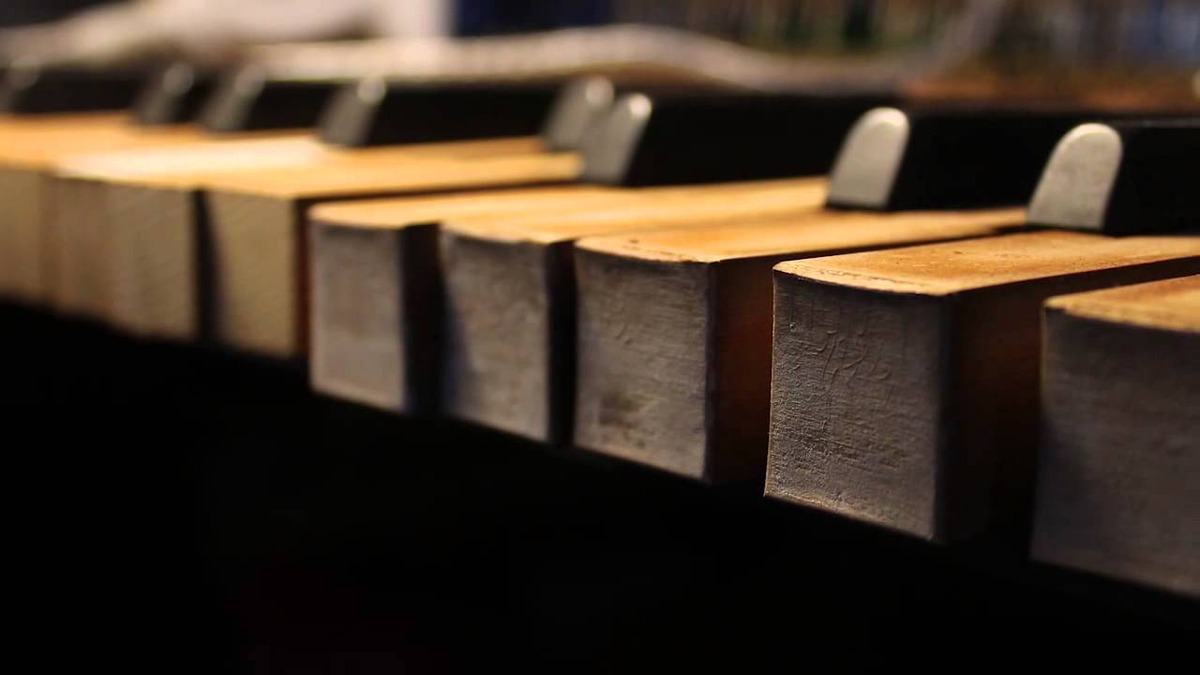
1
Action out, strings off, the frame and soundboard examined properly. This is where we find out whether the instrument deserves the rest of the work, and it is the stage where we will tell you to stop if it does not.
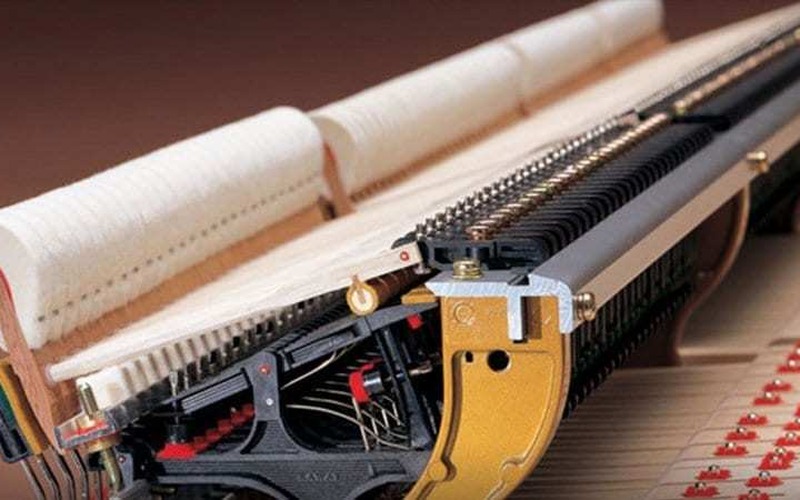
2
New strings, new tuning pins where the old ones no longer hold, dampers and hammers replaced as the instrument needs. The action goes back together part by part rather than being cleaned and refitted.
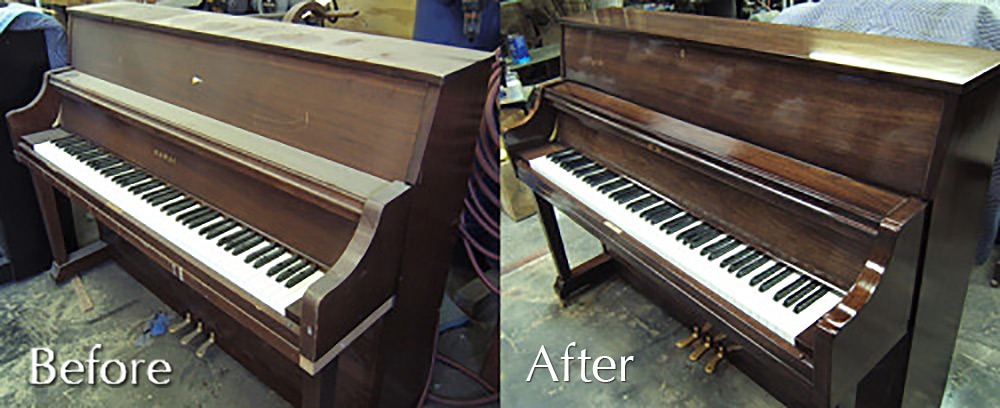
3
Stripped back, repaired where the veneer has lifted, and refinished. Malaysian humidity and thirty years of afternoon sun do more to a piano case than playing it ever does.
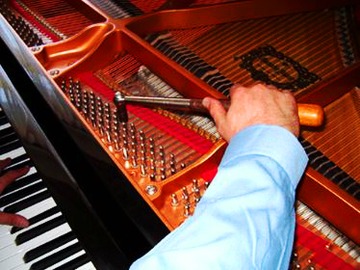
4
A rebuilt piano is not finished when it is assembled. The action is regulated across all 88 notes, the hammers are voiced so the tone is even, and then it is tuned and left to settle before it is tuned again.
We would rather talk somebody out of a rebuild than take the work and hand back an instrument that was never going to be good. These are the three things that decide it, and none of them is how old the piano is.
We rebuild Japanese uprights every week because that is how our own stock reaches the shop floor. A customer instrument goes through the same bench, the same sequence and the same hands.
Nobody should commit to a rebuild on a phone call. The assessment comes first and it is the stage where we tell you not to bother if that is the honest answer.
The serial gives us the year and the generation. Photos of the case, keys and inside the lid give us most of the rest.
Soundboard and pinblock decide this, not age. If the answer is no, you hear it before anything is collected.
The instrument comes to the Petaling Jaya workshop on our truck, not a general removal van.
Delivered back, positioned, regulated across all 88 notes and tuned, then tuned again once it settles.
A restoration starts and ends with a move, both by our own crew. These are the areas we collect from and return to as a matter of routine.
Our piano shop is at Tropicana City Mall in Petaling Jaya, so most of Kuala Lumpur and Selangor is inside an hour of a van. We do travel further for the right job, and delivery on a piano bought from us is free anywhere in Peninsular Malaysia. Staircase carries are quoted separately, because the cost comes from the steps and the turns rather than the distance.
What Yamaha and Kawai uprights are genuinely worth holding on to, and why Japanese instruments survive this climate better than most.
Two to four men, proper skids and straps, and the route walked before the piano comes off the wall. Stairs, lifts, narrow landings and grands taken down in parts.
Regular tuning for instruments that are close to pitch, and pitch raises for the ones that have sat unplayed for years and dropped well below A440.
Sticking keys, dead notes, broken hammer shanks, worn centre pins and pedals that no longer bite. Most of it is action work, and most of it is fixable.
Rent a restored Japanese upright by the month, take one for a few weeks around an exam, or have a piano delivered and collected for a single event. Delivered, positioned and tuned by our own crew.
Every Yamaha and Kawai we sell has been through the workshop twice before it reaches the floor. Free delivery, a bench, two tunings and a five-year warranty are in the price.
A repair fixes what has failed. A restoration takes the instrument back to how it left the factory, which means the parts that have not failed yet get replaced too. If you are chasing one dead note, you want a repair.
It depends entirely on what the instrument needs and what has to be ordered in, so we quote the stages rather than a date. Restringing and an action rebuild are the long parts. Case refinishing runs alongside them because the piano is already apart.
Yes, and a fair number of the jobs we take in are exactly that. A piano that plays well but looks tired after thirty years in a Malaysian living room is a cabinet job, and there is no reason to open up the parts that are working.
Sometimes, and we will say when it is not. A good Japanese upright with a sound board and frame is usually worth the work. A piano with a cracked soundboard or pins that no longer hold is money spent to arrive somewhere you could have started. Send photographs and the serial number and we will tell you which one you have.
Yes. The workshop knows the Japanese instruments best after four decades of rebuilding them for our own floor, but European and Korean uprights come through as well.
The serial number tells us the year and the generation. Photographs of the case, the keys and the inside of the lid tell us most of the rest. From those we can say whether it is worth it before anybody commits to anything.