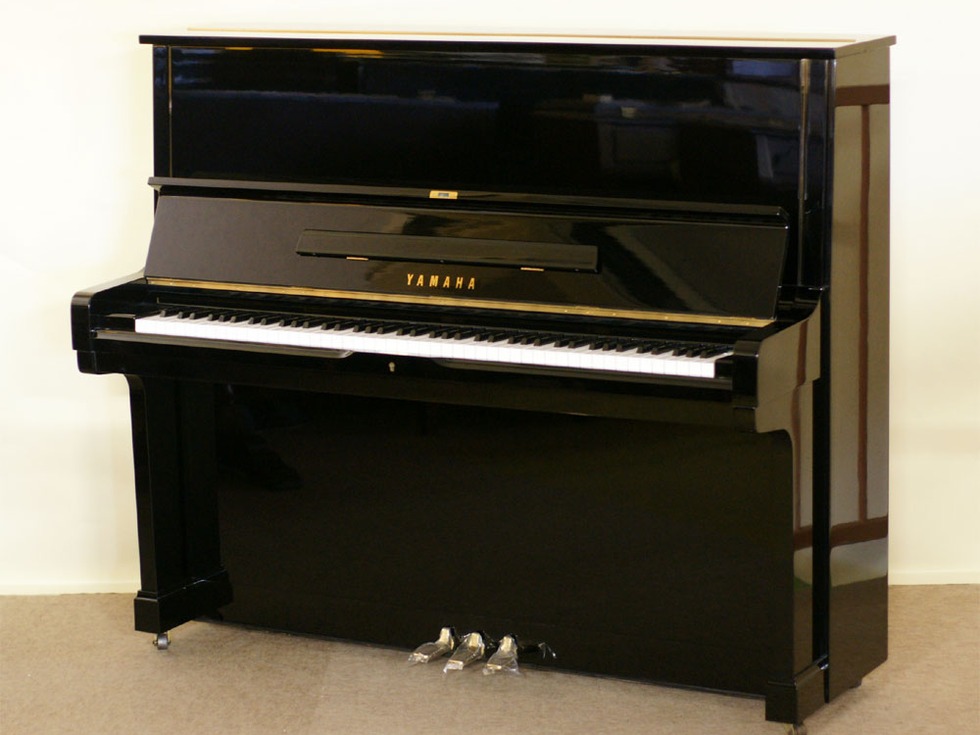
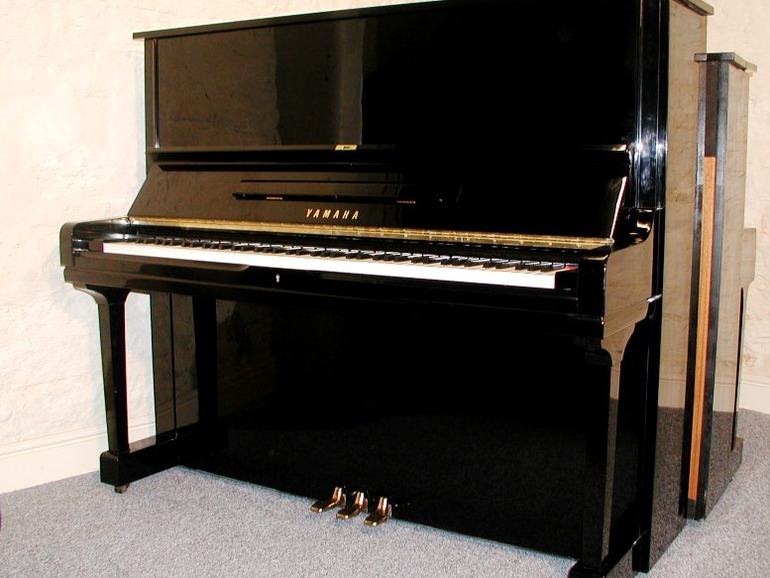
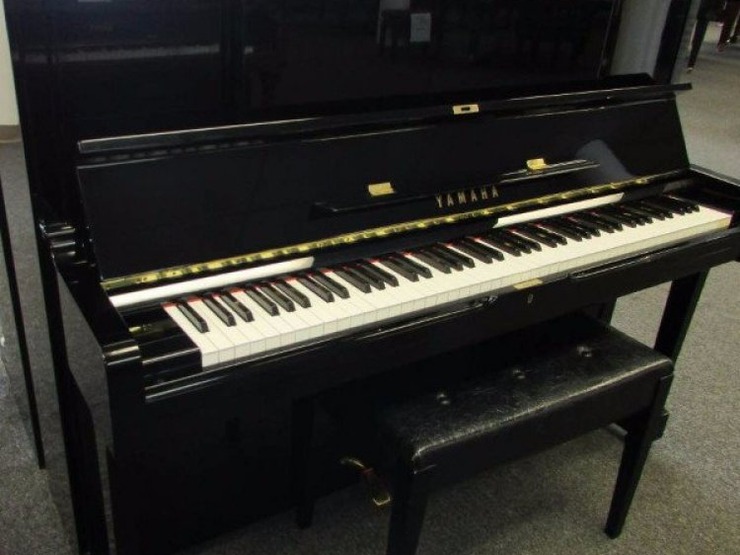
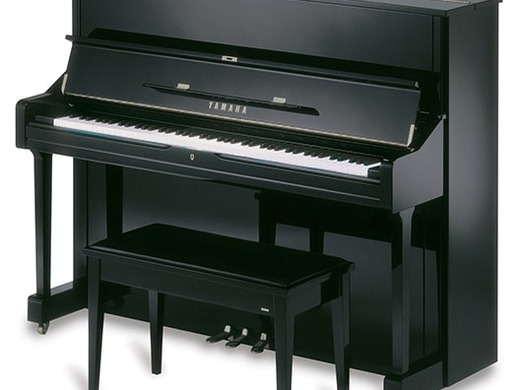
Yamaha U1H Upright Piano
- Height 121 cm
- Weight 217 kg
- Width 150 cm
- Depth 61 cm
- Finish Polished ebony
The default first serious piano, and the easiest of the lot to sell on later if the household changes its mind.
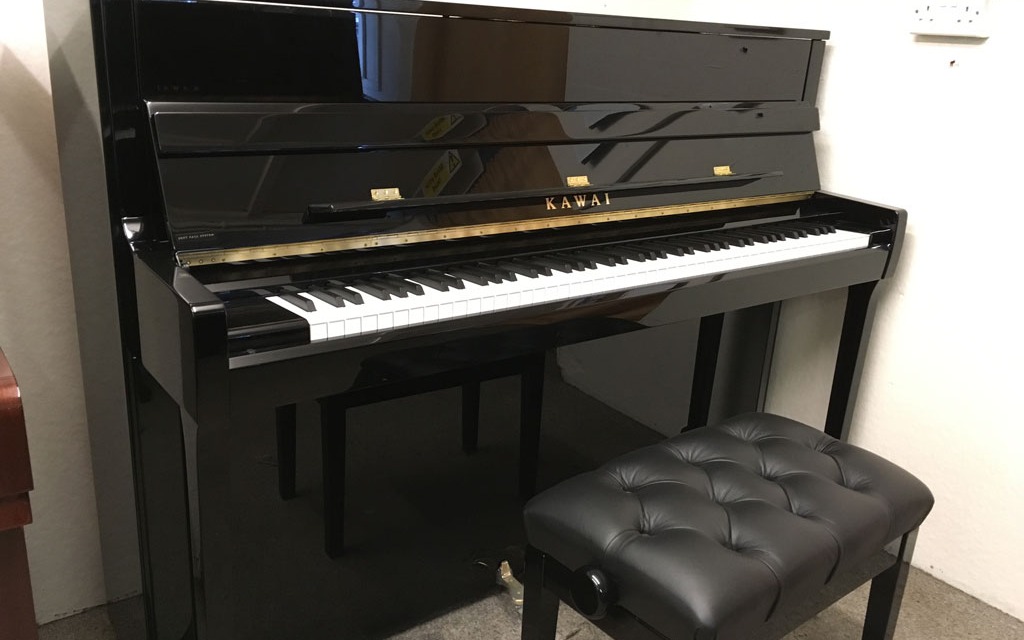
Every upright below has been through a full restoration in Japan and a second rebuild in our own workshop. It is tuned on the floor, so you play the exact instrument before you pay for it.
These six come through the workshop more than anything else, so we know their quirks well. Stock changes week to week. Ask before you travel and we will tell you exactly what is standing on the floor.

The default first serious piano, and the easiest of the lot to sell on later if the household changes its mind.

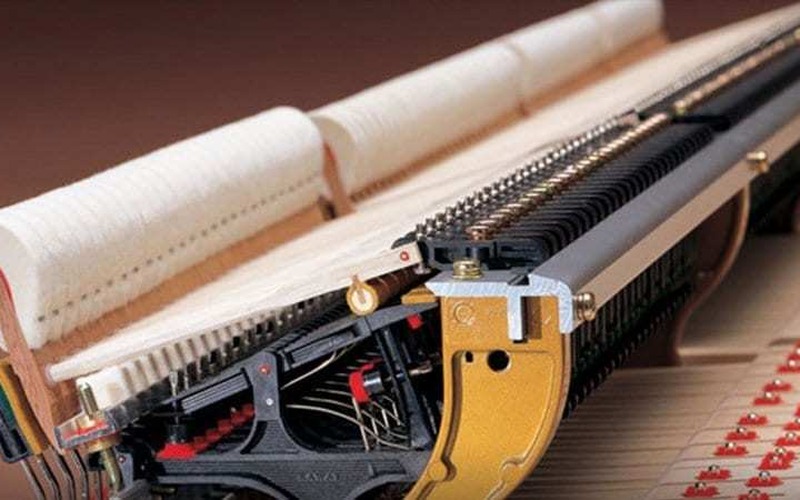
Six centimetres taller than the U1H, and you hear it in the bass. Sits well in a landed house where the piano gets played daily.

What teachers and exam candidates ask for. Check your access first, because 248 kg up a staircase is a different job from 217 kg into a lift.

The X-braced back gives it more presence than the height suggests. Our answer for apartments where a U3 will not fit but the player wants more piano.

Full height at a moving weight closer to a U1H. Warmer than the Yamahas, which suits players who find a bright top end tiring.

The lightest upright we stock. When there is no service lift and the piano has to go up a staircase, this is usually the honest recommendation.
Start with the brand and the type, or type the number printed on the fallboard straight into the search. Every model opens its own page with the height or length, the weight and what the room and the staircase have to allow for.
The U, UX, YU and W lines plus the compacts, from a 101 cm LU-101 to the 131 cm professional cases. The number is the height and the letter is the generation. Open the Yamaha uprights page.
Yamaha's 121 cm upright and the most widely owned serious piano in the country. The letter marks the generation, not the size.
127 cm, six centimetres taller than a U1, and the difference lands in the bass rather than the touch.
Yamaha's 131 cm upright. What teachers ask for, and what most exam candidates practise on at home.
X-braced backs and heavier build than the U line at the same height. More power than the dimensions suggest, and still an upright.
A later domestic series replacing the U numbering. YUS and YUA sit at the top of the range.
Wood grain cabinets rather than polished ebony, built for rooms where a black case would dominate.
Yamaha's smaller cabinets, from 101 cm to 113 cm. Built for tight rooms and the lightest acoustic pianos Yamaha made.
From the 149 cm A1R through the G and C lines to the 275 cm CF. Grands arrive in ones and twos rather than standing on the floor. Open the Yamaha grands page.
Yamaha's shortest grand at 149 cm, made for rooms that cannot take a full baby grand.
Yamaha's long-running grand line before the C series. Many are two-pedal domestic instruments.
Yamaha's conservatory line and the grands you meet in music schools and recital rooms.
Yamaha's full concert instrument at 275 cm. A stage piano, not a living-room one.
Yamaha's earliest grand numbering, before the G and C lines replaced it. Two-pedal instruments built for the domestic Japanese market.
The K, BL, BS, KU, KS-F, KST, NS, US, CL, CX, M and OP lines, plus the AT silent hybrids. Kawai ran more separate lines than Yamaha and sold most of them only in Japan. Open the Kawai uprights page.
The first generation of Kawai uprights, and the line the later series grew out of. Many left the factory with two pedals and have had a third fitted during restoration.
The line that succeeded the original K series and the most successful run in Kawai's history. BL numbers climb with height.
A shallow-cased run from the same period as the BL line. The reduced depth is the point when a hallway is tight.
Kawai's long-running domestic line for the Japanese market, which is why so many reach Malaysia. B and D suffixes mark later revisions, not different sizes.
A later domestic line with the F suffix. Heights step in tight increments, so there is usually one that matches an awkward wall.
Compact console-height instruments at 115 cm, built for smaller Japanese rooms and a natural fit for an apartment here.
A domestic line sitting between the BL and US runs. Sensible heights and conventional cases.
Kawai's professional line, and the heaviest uprights they built for homes and institutions. Long strings and weights that need planning.
Slim-cased uprights with a shallower depth than the rest of the range.
Low console models at 112 cm, several in wood grain rather than polished ebony.
A domestic model in the common 125 cm class, conventional in case and action.
Acoustic pianos fitted with Kawai's silent system, so the action can be muted and played through headphones.
The KG and RX lines, the GS and CA institution grands, and the hand-built Shigeru at the top. Smaller numbers again, so ask before you plan a room. Open the Kawai grands page.
Kawai's long-running grand line. The number tracks length: a KG-1 is 164 cm, a KG-8 is a 276 cm concert instrument.
The line that replaced the KG series, with a redesigned action and a stiffer rim.
Studio and conservatory grands built for institutions, which is where most of them spent their working life.
Acoustic pianos fitted with Kawai's silent system, so the action can be muted and played through headphones.
Kawai's earlier grand numbering. Many are two-pedal instruments from the domestic Japanese market.
Kawai's hand-built flagship line, made in small numbers and voiced individually. Rare on the used market anywhere.
No model with that number is on our list. Send us the name from the fallboard and the serial number and we will tell you what it is. Ask on WhatsApp.
Height and weight decide more purchases than tone does. A 121 cm upright at 217 kg and a 132 cm upright at 260 kg are very different propositions once you have a lift, a landing and a turn to get through. Find your situation, then ask us what is on the floor.
Under 121 cm of wall to spare, or a lift you have to book with the management office. You want the lighter uprights, and the route walked before delivery day.
Usually suitsA landed house or a ground floor unit with room to breathe. Mid height uprights give children something they will not outgrow by grade five, without a moving bill to match.
Usually suitsGraded exams, accompaniment work or a home studio. You are listening for bass length and repetition speed, and you have the floor space for a full height upright.
Usually suitsWe sell Japanese Yamaha and Kawai, and almost all of it is uprights. The two brands built the instruments that hold their tune, their value and their action longest, and they are the two brands our workshop knows part by part after four decades.
The U1, U2, U3 and UX lines. Bright, even and quick under the fingers, which is why teachers and exam candidates keep asking for them, and the easiest of all to resell later.
The BL, BS and K lines. Warmer and rounder in the top end, which suits players who find a bright treble tiring, and several come in lighter to move when there is no service lift.
Rent a restored upright by the month. If you keep it, everything you have paid comes off the purchase price, and the workshop that rebuilt it is the one that services it.
Once in Japan, once again in our own workshop in Selangor. Nothing reaches the floor until the action has been regulated and the instrument holds a tune, so the piano you try in the shop is the piano you get at home.
1
Bought from Japanese households and schools, where pianos are serviced on schedule and the climate treats a soundboard far better than ours does.
2
Strings, hammers, dampers and pedal linkages checked and replaced where needed, the case refinished, then the whole action regulated.
3
It waits at A440 so you can play it before you commit. Bring your own pieces. Nobody should buy a piano from a photograph.
4
Our own crew moves and positions it, then comes back to tune it twice in the first two weeks once the piano has settled into your room.
Same budget, two very different instruments. Here is the honest comparison, side by side.
All four, included. Not offered as an upgrade at the end.
Both within the first two weeks, once the piano has settled into your room and its humidity.
Upholstered bench with a music compartment, piano heater, caster cup set and a key cover.
Anywhere in Peninsular Malaysia, to a ground floor or a unit reachable by service lift.
Parts and labour, serviced by the same workshop that rebuilt the piano in the first place.
What is fixed is what you get. What moves is the instrument itself.
None of it is an add-on at the end. Staircase carries are the one thing quoted separately.
Two pianos wearing the same badge can be thousands of ringgit apart, and the badge is not what decides it. We price the actual instrument standing on the floor. Four things move the number:
Rent a restored upright by the month. If you keep it, every ringgit of rental comes off the purchase price, so nothing you pay is wasted.
Including instruments we did not sell. The crew that delivers your piano is the crew that comes back to tune it.
1st Floor Centre Court, Jalan SS20/27, 47400 Petaling Jaya. Message us and we will have the models you want to hear tuned and open.
We price the actual instrument rather than the model, because two pianos wearing the same badge can be thousands of ringgit apart once you account for age, case condition and how much of the action was replaced. Send us the model you are after and we will quote it. Every price includes free delivery, a bench, two tunings and the five-year warranty.
Japanese Yamaha and Kawai. Almost all of what we carry is uprights, Yamaha across the U1, U2, U3 and UX lines and Kawai across the BL, BS and K lines. Grands come through in ones and twos, so ask us what is available rather than expecting a list. Sunwave Piano has handled more than 200 models since 1979.
Rebuilt. Each upright is inspected, restored and tuned in Japan before it is shipped, then goes through our own workshop a second time before it goes on the floor. Action regulated, strings and dampers checked, case refinished.
A rebuilt Japanese upright is one of the safest instruments you can buy at this money, and ours carry a five-year warranty on parts and labour. What it does need is tuning twice a year, which is true of every piano in this climate, new or used.
Yes. Delivery is free anywhere in Peninsular Malaysia to a ground floor or a unit reachable by service lift. Staircase carries are quoted separately, because the cost comes from the steps and the turns rather than the distance.
Yes, through rent-to-own. You rent a restored upright by the month, and if you decide to buy it, everything you have already paid in rental comes off the purchase price. Rental stock is not on the shop floor, so message us first and we will tell you what is available.
Four answers settle it: the size of the room, which floor the piano is going to, whether there is a service lift, and who is playing. A 121 cm U1H at 217 kg and a 131 cm U3H at 248 kg suit very different homes, and the difference matters more on moving day than it does musically.
The piano shop is on the 1st floor centre court of Tropicana City Mall, Jalan SS20/27, 47400 Petaling Jaya. Message us before you come and we will have the models you want to hear tuned and open.
Nobody should buy a piano from a photograph. Tell us what you are looking for and we will have it tuned and open when you walk in.